- The original casperecosystem.io domain currently redirects to the Casper Network ecosystem page.
- The portfolio describes Alejandro's contribution to a Casper ecosystem platform and avoids claiming that the currently visible page is exactly the original custom platform.
Backend platform
Casper Ecosystem Platform
A Web3 platform for the Casper ecosystem combining blockchain data, GitHub project data, and cryptocurrency market data into a unified backend and frontend experience.
RoleBackend / Full-Stack Web3 Developer
Timeline2022-2024
FocusBackend platform
Ecosystem discoveryAPI-first backendMulti-source data
Overview
Unified blockchain, market, and developer data for the Casper ecosystem.
A Web3 platform for the Casper ecosystem combining blockchain data, GitHub project data, and cryptocurrency market data into a unified backend and frontend experience.
Problem, context, and constraints
Users in blockchain ecosystems often need information spread across multiple sources such as blockchain data, project activity, and market data.
A unified platform improves discoverability, ecosystem visibility, and access to real-time technical and market information.
- External data sources have different update patterns and reliability constraints.
- Market providers and GitHub APIs introduce rate limits and freshness tradeoffs.
- The backend needed documentation discipline for long-term maintainability.
My role and contribution
Backend / Full-Stack Web3 Developer
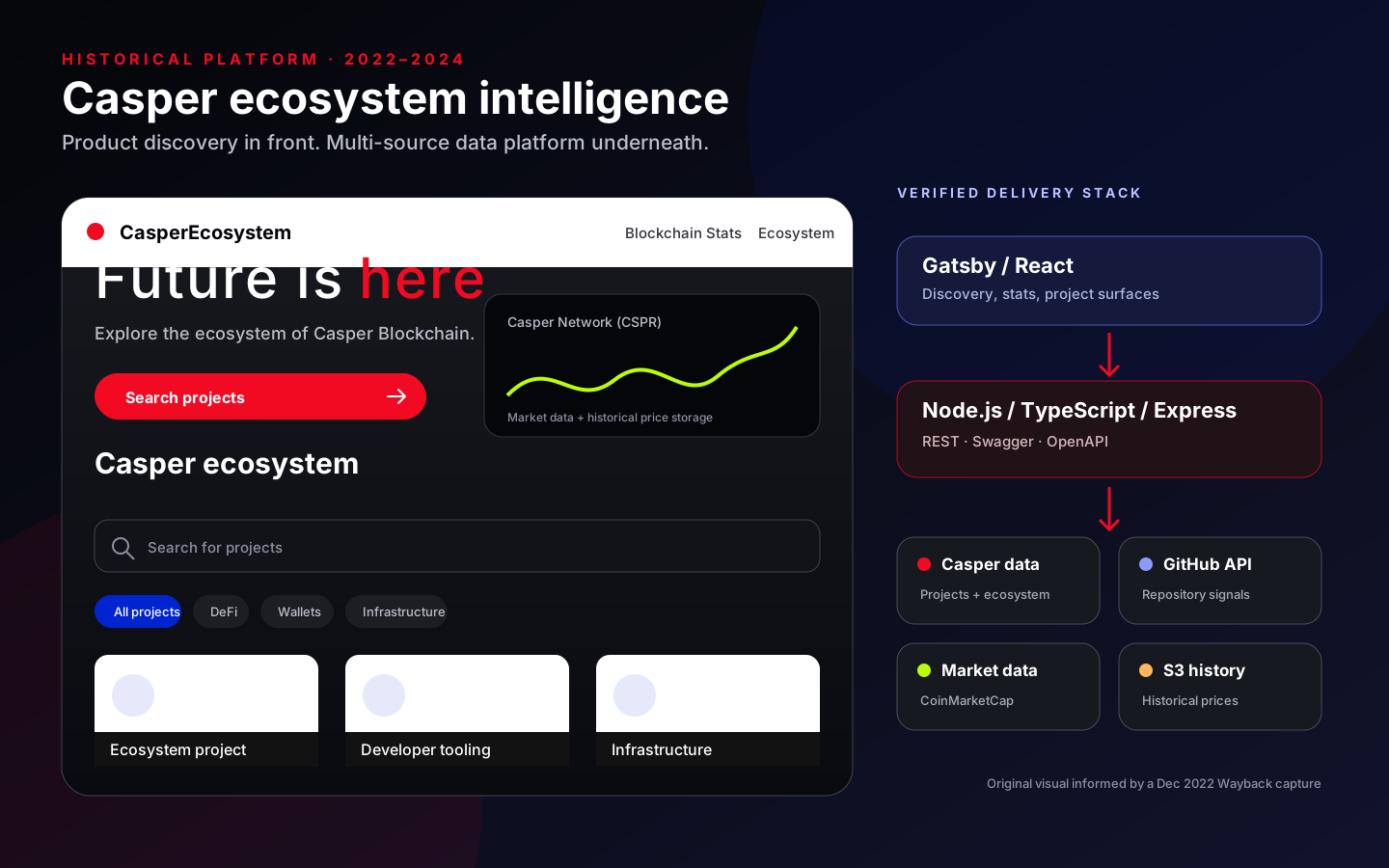
- Built backend services with Node.js, TypeScript, and Express.
- Generated API documentation with Swagger/OpenAPI.
- Integrated blockchain-specific Casper ecosystem functionality.
- Integrated GitHub API for repository updates and project stats.
- Integrated CoinMarketCap for live crypto price data.
- Used Amazon S3 for price history storage.
- Supported a Gatsby/React frontend for access to real-time data.
Architecture and system details
A service-oriented backend aggregated data from blockchain-specific sources, GitHub activity, and crypto market providers, then exposed that data through documented APIs consumed by a Gatsby/React frontend.
01Frontend
- Gatsby
- React
- JavaScript
02Backend
- Node.js
- TypeScript
- Express
- REST APIs
03Data
- Dedicated database for price history
- Amazon S3 storage
- GitHub and market data aggregation
04Integrations
- Casper blockchain ecosystem
- GitHub API
- CoinMarketCap API
- Amazon S3
Key technical decisions
- Context
- The frontend needed structured access to blockchain, GitHub, and market data.
- Choice
- Build a documented REST API with Swagger/OpenAPI.
- Tradeoff
- This adds documentation discipline and API maintenance overhead, but improves developer usability and long-term maintainability.
- Context
- Ecosystem users needed data from multiple independent sources.
- Choice
- Aggregate blockchain-specific data, GitHub repository data, and CoinMarketCap market data.
- Tradeoff
- This improved visibility but introduced rate limits, freshness constraints, and third-party reliability concerns.
- Context
- Historical market data needed to be persisted efficiently.
- Choice
- Use Amazon S3 for price history storage.
- Tradeoff
- Object storage can be cost-effective and simple, but requires careful design around data retrieval and update patterns.
Security, scaling, and reliability
- Documentation and typed backend structure supported maintainability.
- S3 used to persist price history efficiently.
- Frontend optimized for fast access to dynamic data.
- Needed to balance real-time freshness against rate limits and caching complexity.
- Needed resilience around third-party API dependencies.
Testing strategy
- Testing strategy focuses on API behavior, external-provider integrations, frontend smoke paths, and response-contract validation across aggregated data sources.
- Exact test tooling and coverage are not documented in the public brief.
Result and proof
- Unified multiple sources into one platform.
- Improved access to blockchain, project, and market visibility for Casper ecosystem users and developers.
- Created documented APIs for ecosystem data.
Before
Fragmented ecosystem, GitHub, and market information.
After
One interface for blockchain, project, and market visibility.
Challenges, tradeoffs, and next steps
Hardest part: Coordinating multiple external data sources with different update patterns and reliability constraints.
Key learning: How to design backend services that balance real-time data, third-party integrations, and developer usability.
- Add stronger caching.
- Add observability.
- Add resilience around third-party API dependencies.
- Improve public documentation and architecture diagrams.