- This is an older learning project and should support the growth narrative rather than lead the portfolio.
Early full-stack proof
MERN Project - OpenBootcamp Intensive
A MERN-stack web application that allowed users to register, create katas, and interact with them.
RoleFull-Stack Developer
Timeline2022
FocusEarly full-stack proof
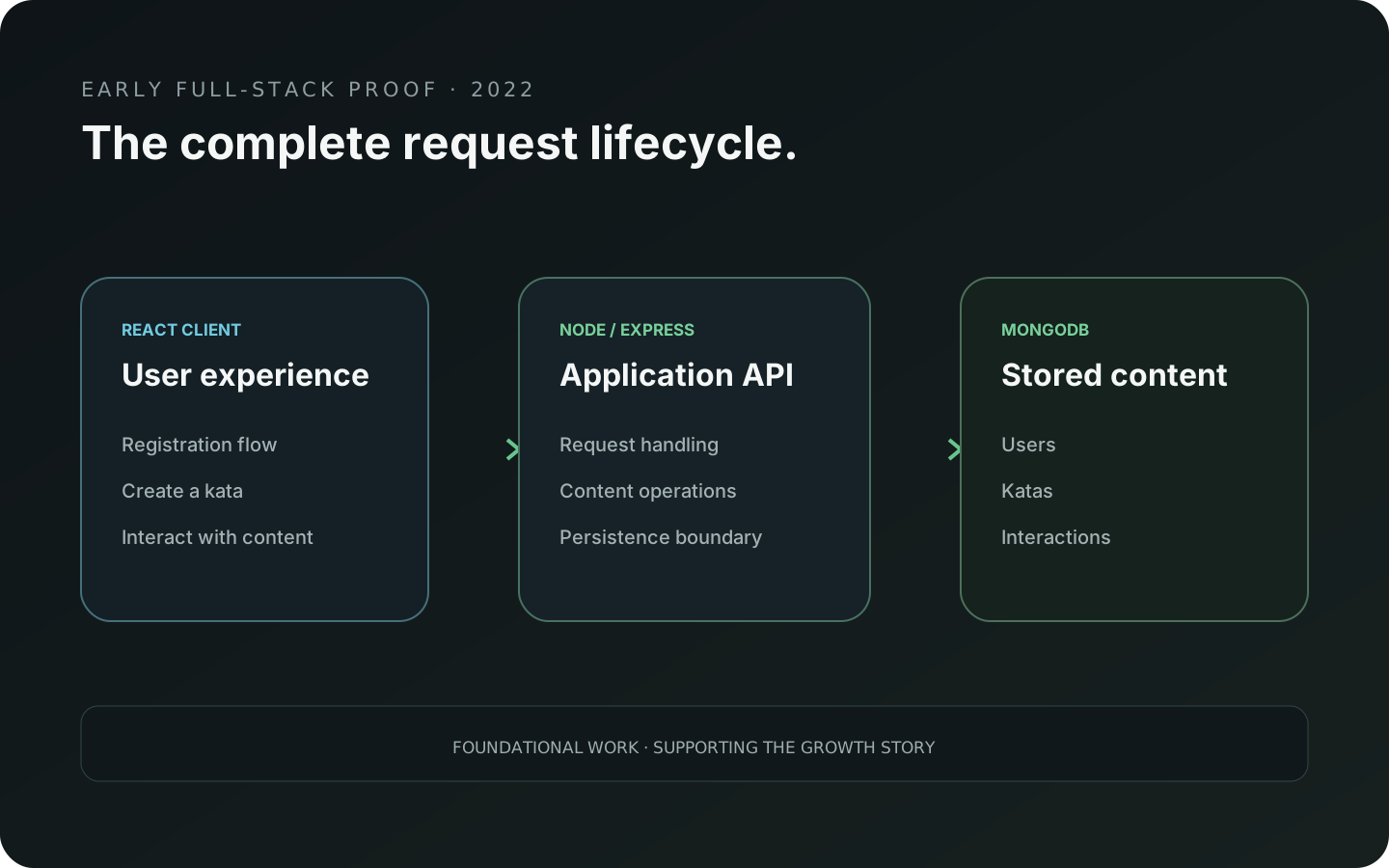
React clientExpress APIMongoDB persistence
Overview
End-to-end MERN application for user registration and interactive kata creation.
A MERN-stack web application that allowed users to register, create katas, and interact with them.
Problem, context, and constraints
The project was built as a practical full-stack application to demonstrate user registration, content creation, and interaction workflows in a MERN architecture.
It provided hands-on experience with the full request lifecycle across frontend, backend, and database layers.
- The project was intended for practical full-stack learning.
- It would need stronger production hardening before being positioned as a mature production system.
My role and contribution
Full-Stack Developer
- Built a MongoDB, Express, React, and Node.js web app.
- Supported user registration.
- Supported kata creation.
- Supported user interaction with stored content.
- Connected frontend, backend, and persistence in an end-to-end workflow.
Architecture and system details
A classic MERN application where the React frontend communicated with an Express/Node backend backed by MongoDB for persistence.
01Frontend
- React
02Backend
- Node.js
- Express
03Database
- MongoDB
04Delivery
- GitLab
- Deployment details TBD
Key technical decisions
- Context
- The goal was practical full-stack learning.
- Choice
- Build the full request lifecycle across React, Express, Node.js, and MongoDB.
- Tradeoff
- This enabled rapid learning and feature delivery but was not intended as a highly differentiated production system.
Security, scaling, and reliability
- Suitable for demonstrating full-stack fluency.
- Would need stronger production hardening for scale.
- Auth, validation, testing, and deployment details should be improved if featured publicly.
Testing strategy
- Public testing details are not documented for this earlier learning project.
Result and proof
- Demonstrated full-stack development ability.
- Built practical experience across frontend, backend, and persistence.
Before
Theoretical MERN knowledge.
After
A working full-stack application.
Challenges, tradeoffs, and next steps
Hardest part: Connecting frontend, backend, and persistence cleanly while learning the stack in practice.
Key learning: The value of shipping end-to-end features and thinking across the full product surface.
- Upgrade authentication.
- Improve UI polish.
- Add tests.
- Add deployment.
- Improve production readiness.