- This project is a strong non-Web3 backend proof point.
- It shows provider abstraction, caching, data modeling, and internal platform usefulness.
Backend API
Translator API
An internal translation API built for A3M to provide multilingual translation services through multiple third-party providers with caching and statistics.
RoleBackend Developer
FocusBackend API
Internal project
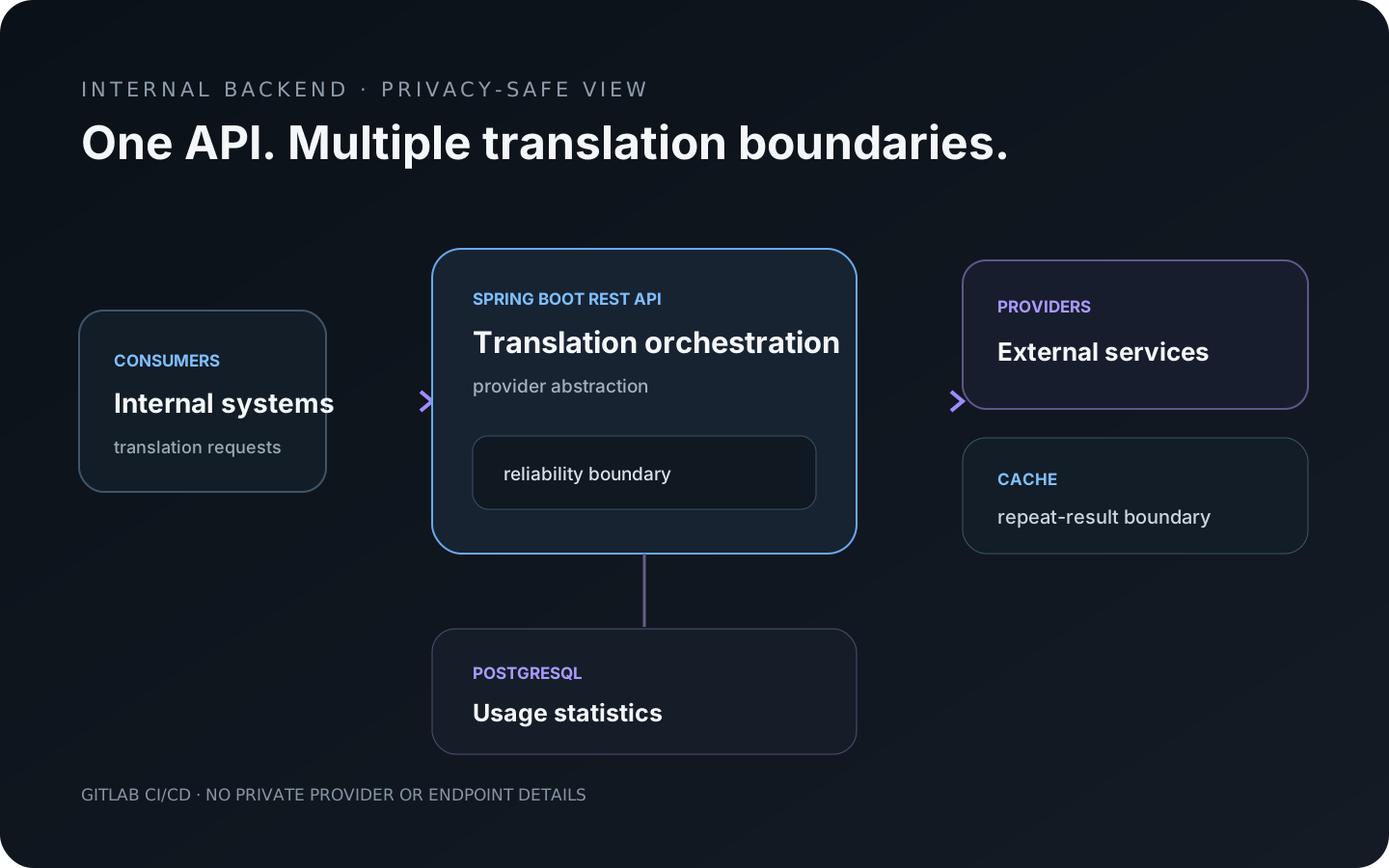
Provider abstractionCaching boundaryUsage statistics
Overview
Internal translation API with provider abstraction, caching, PostgreSQL statistics, and CI/CD.
An internal translation API built for A3M to provide multilingual translation services through multiple third-party providers with caching and statistics.
Problem, context, and constraints
Teams needed reliable translation services across systems while controlling cost, improving response times, and centralizing translation usage data.
Multilingual communication needs to be fast, reliable, and manageable at scale, especially inside operational systems.
- The API needed to support multiple third-party providers.
- Repeated translation calls could be costly or slow.
- Reliability depended partly on external provider behavior.
My role and contribution
Backend Developer
- Built a unified REST API for translation services.
- Integrated multiple third-party translation APIs.
- Used PostgreSQL for translation statistics.
- Added caching to reduce external calls and improve performance.
- Designed backend logic around reliability and operational use.
Architecture and system details
A backend API routed translation requests to one or more external providers, cached results where appropriate, and recorded statistics in PostgreSQL to improve efficiency and visibility.
01API
- Java
- Spring Boot
- Gradle
- REST API
02Data
- PostgreSQL
- Translation statistics
- Caching
03Providers
- Multiple third-party translation APIs
- Provider abstraction
- External failure boundaries
04Delivery
- GitLab CI/CD
- Internal platform use
Key technical decisions
- Context
- The system needed to support multiple third-party translation providers.
- Choice
- Build a unified API abstraction over provider-specific implementations.
- Tradeoff
- This simplified downstream systems but added internal complexity around provider differences and failure handling.
- Context
- Translation calls can be repeated and external APIs can be costly or slower than internal services.
- Choice
- Cache translated results where appropriate.
- Tradeoff
- Caching improved cost and response time, while requiring careful thinking around freshness and cache invalidation.
- Context
- Teams needed visibility into translation usage.
- Choice
- Store statistics in PostgreSQL.
- Tradeoff
- This added operational insight but required disciplined data modeling and maintenance.
Security, scaling, and reliability
- Caching reduced repeated calls and improved response times.
- API abstraction simplified downstream use.
- Database-backed metrics supported operational analysis.
- Reliability depended partly on external providers.
- Potential need for auth, rate limiting, and provider failover.
Testing strategy
- Testing strategy focuses on provider adapters, API integration boundaries, cache behavior, error handling, and provider failure paths.
- Exact test tooling and coverage remain confidential or are not documented in the public brief.
Result and proof
- Centralized translation services for internal A3M systems.
- Reduced repeated translation calls through caching.
- Improved visibility through PostgreSQL-backed statistics.
- Improved translation response times.
Before
Fragmented or repetitive translation integrations.
After
Centralized translation service with caching and stats.
Challenges, tradeoffs, and next steps
Hardest part: Balancing performance, provider integration complexity, and reliability while keeping the API clean.
Key learning: How to design internal APIs that are operationally efficient and useful across teams.
- Add clearer observability.
- Add provider failover.
- Strengthen auth and rate limiting if needed.
- Add architecture documentation.